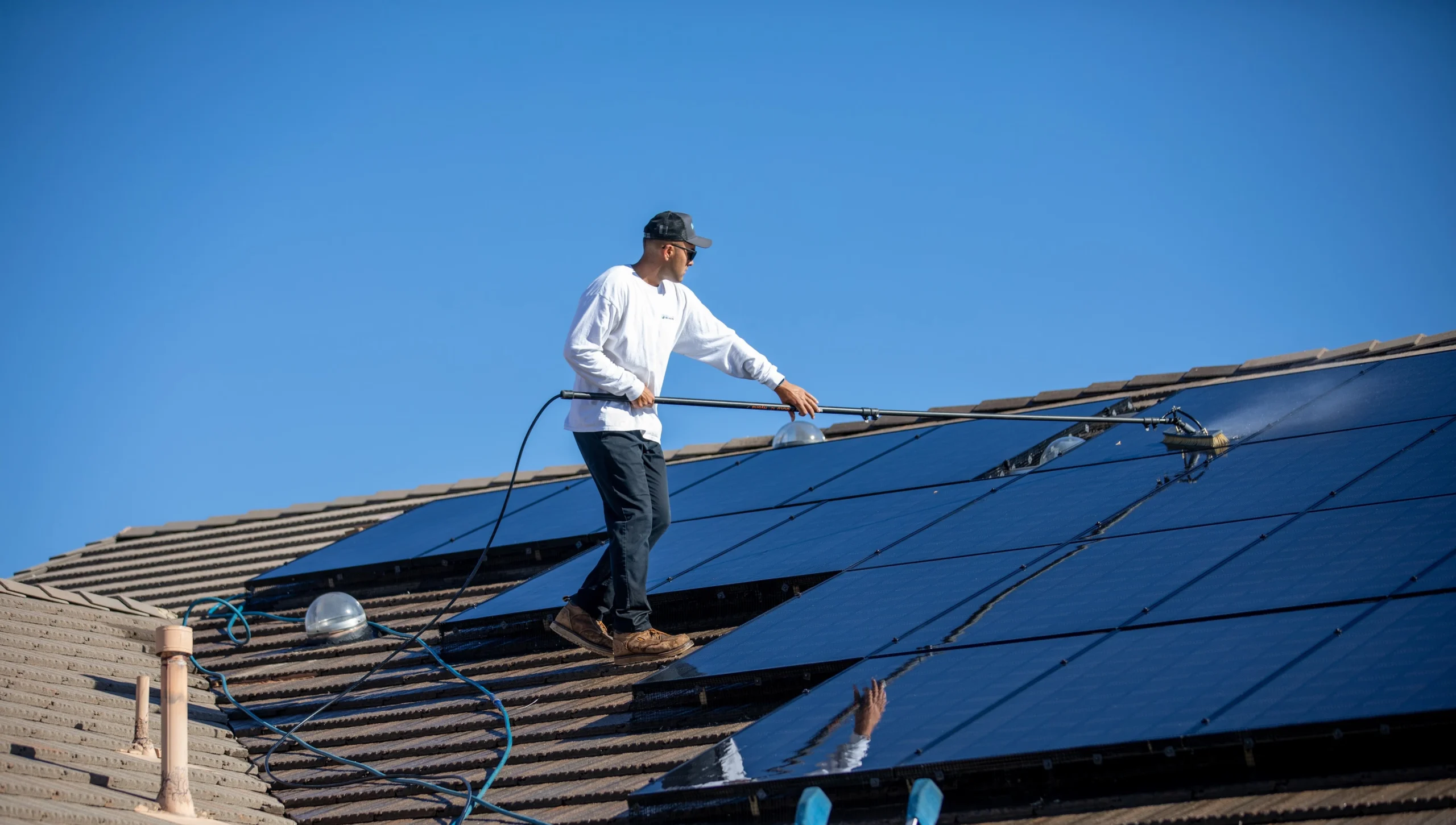
Solar panels are designed to work efficiently for 25–30 years — but they are not “set it and forget it” systems. One of the biggest misconceptions about solar is that rain alone keeps panels clean. While rain helps remove loose dust, it does not clean panels thoroughly, especially in Texas where pollen, dust, and debris accumulate quickly.
In fact, studies show that dirty solar panels can lose 15% to 25% of their energy production without the homeowner even noticing.
This means you’re losing money every single month simply because your panels are not clean.
In this detailed guide, you’ll learn:
- Why solar panel cleaning is essential
- How buildup affects energy production
- What causes dirty panels in Texas
- How often you should clean them
- The safest way to get panels professionally cleaned
- Why DIY cleaning can actually damage your system
1. Why Solar Panel Cleaning Is So Important
Solar panels generate electricity by absorbing sunlight. If dirt covers the surface, sunlight becomes blocked — lowering the panel’s ability to generate power.
This means:
Less light → Less energy → Higher electric bills
Even a thin layer of dust can disrupt a panel’s ability to convert sunlight efficiently.
Common impacts of dirty panels include:
- Reduced energy production
- Increased power usage from the grid
- Shorter panel lifespan
- Higher electric bills
- Stress on your inverter and wiring
Keeping panels clean ensures they perform as efficiently as possible.
2. How Much Efficiency Is Lost with Dirty Panels?
Multiple studies, including one from the National Renewable Energy Laboratory (NREL), found:
Panels lose 15–25% efficiency due to dirt buildup.
In some cases, especially during heavy pollen seasons or after dust storms, the loss can go up to 30% or more.
This is especially true in Texas, where:
- Pollen levels are high
- Wind carries dust and sand
- Bird activity is common
- Humidity helps dirt stick harder
The more dirt on your panels, the less sunlight reaches the cells — and the lower your solar savings.
3. What Makes Solar Panels Dirty in Texas?
Texas weather plays a big role in how quickly panels get dirty.
Here’s what causes buildup:
1. Pollen (Spring)
Texas experiences heavy pollen seasons. Pollen forms a sticky yellow layer that rain cannot remove effectively.
2. Dust & Sand (Year-Round)
Areas near construction sites, open fields, farms, or high-wind zones accumulate dust quickly.
3. Bird Droppings
Bird waste blocks sunlight completely and is difficult to wash off with just rain.
4. Tree Sap & Leaves
Homes near trees often see sap stains and leaf debris collecting on panels.
5. Air Pollution
Vehicle emissions and industrial zones leave behind oily residue.
6. Hard Water Stains
When homeowners attempt DIY cleaning, using hose water often leaves mineral spots that permanently reduce efficiency.
Because Texas faces extreme temperature swings, dust and grime bake onto the panels, making them even harder to remove.
4. How Often Should You Clean Solar Panels?
The general recommendation for Texas climate is:
📌 Every 6 months (2 times per year)
But depending on location, some homes need cleaning more often.
Homes needing 3–4 cleanings per year:
- Near fields or farmland
- Near construction zones
- Surrounded by trees
- Homes with many birds
- Homes near highways
Signs your panels need cleaning:
- Your energy bill suddenly increases
- Your solar app shows lower production
- Visible dirt or discoloration
- Excess dust or pollen
- After storms or wind events
Keeping a consistent cleaning schedule ensures maximum solar performance year-round.
5. Why Rain Does NOT Clean Solar Panels Properly
Many homeowners assume rain automatically washes the panels — but that’s not true.
Rainwater does NOT remove:
- Stuck-on pollen
- Bird droppings
- Tree sap
- Dust that’s baked by the sun
- Dirt mixed with pollution
- Mineral stains
In fact, rain often leaves behind:
- Water spots
- Mineral residue
- Mud patterns
These deposits act like a sun-blocker on the panel.
Professional cleaning uses pure water systems that remove residue safely without scratching or staining.
6. DIY Cleaning vs. Professional Cleaning — What Homeowners Must Know
While DIY sounds easy, it’s often risky.
❌ Risks of DIY Cleaning
- Scratching the glass surface
- Creating micro-abrasions
- Leaving mineral deposits
- Using too much pressure
- Voiding the warranty
- Falling from the roof
- Damaging wiring or seals
Solar systems are delicate and require specialized cleaning tools.
✔️ Why Professional Cleaning Is Safer & More Effective
Professionals use:
- Deionized (pure) water
- Soft-bristle solar brushes
- Telescopic poles
- Non-abrasive cleaning methods
This ensures:
- No scratches
- No chemical residue
- No damage to panels
- No risk of voiding warranties
Professionals also inspect the system while cleaning, identifying:
- Cracked panels
- Loose wires
- Hotspots
- Inverter issues
- Animal nests
This adds extra safety and long-term performance.
7. How Clean Solar Panels Improve ROI (Return on Investment)
Solar is an investment — and clean panels help you maximize your return.
Clean panels:
✔ Produce more energy
✔ Reduce reliance on the grid
✔ Lower monthly electric bills
✔ Improve system lifespan
✔ Increase overall solar savings
If you lose 20% efficiency due to dirty panels, you’re losing 20% of your savings.
Over a year, that could mean:
$300 to $700 lost — simply from dirt.
A cleaning session easily pays for itself in recovered energy output.
8. Can Dirty Panels Cause Long-Term Damage?
Yes — in some cases, buildup can create irreversible issues.
Potential damage includes:
- Hotspots due to uneven heating
- Glass staining
- Frame corrosion
- Reduced panel lifespan
- Lower inverter performance
- Permanent efficiency loss
Remember: solar panels are designed for 25+ years. Keeping them clean protects your long-term return.
9. How Long Does Professional Cleaning Take?
Most cleanings take:
30–90 minutes, depending on:
- Roof height
- Number of panels
- Degree of dirt buildup
The job is quick, clean, and safe.
Conclusion
Solar panel cleaning is one of the simplest and most effective ways to protect your investment, improve energy output, and keep your electric bills low.
In Texas — where dust, pollen, and heat are constant — keeping your panels clean ensures they operate at full performance and deliver the savings you expect.
If you want your solar system to last decades, regular professional cleaning is essential.